 +86 13773239766
 info@sl-centrifuge.com


parameter:
Bowl: 350–630 × 1,300–2,500 mm
parameter:
Motor: 15–90 kW
parameter:
Capacity: 3–50 m³/h

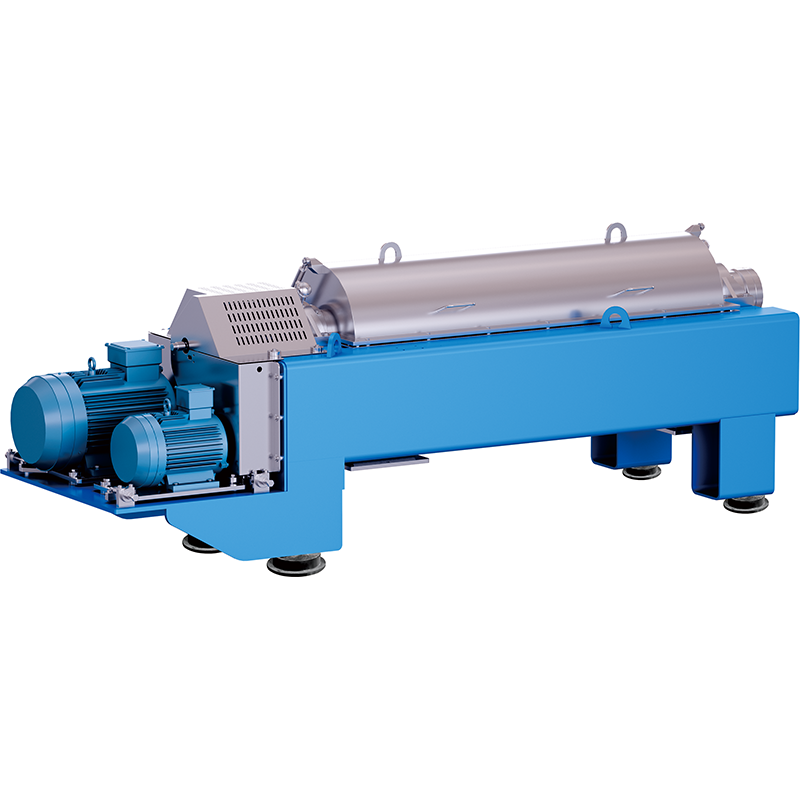
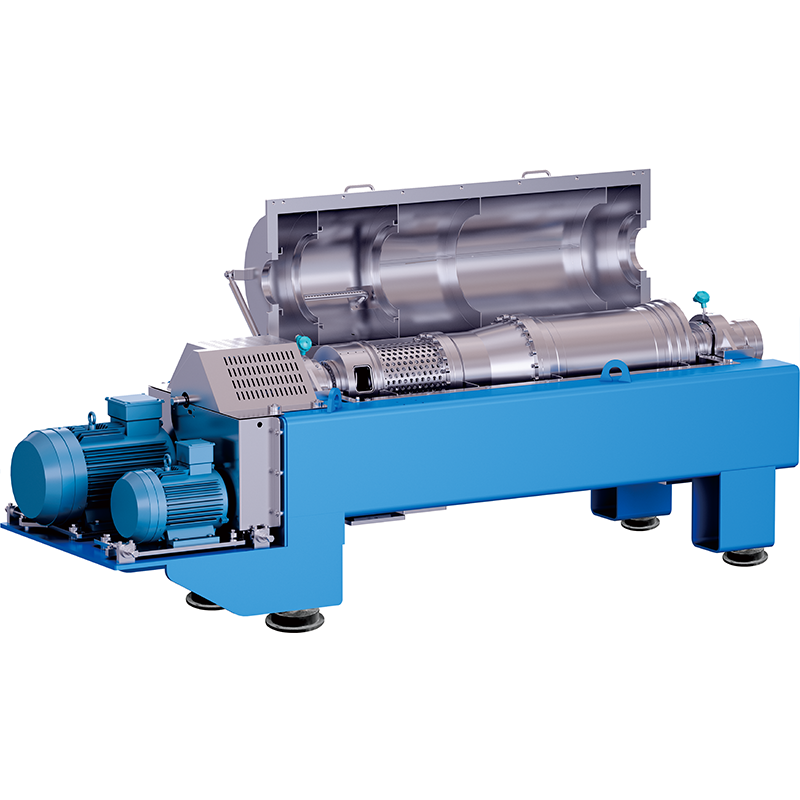
The LWZ sedimentation filtration combined centrifuge puts a settling section and a filtering section in a single rotor. The settling section clarifies the liquor and retains fines that a screen alone would lose; the conical filtering section then dewaters the concentrated solids on a screen, so the cake comes off drier than a plain decanter could manage. In other words it delivers the clarity of a decanter together with a cake dryness closer to a filtering machine. That is why an LWZ is chosen where the filtrate has to be clean and the cake has to be dry at the same time — PVC resin, lactose and Glauber salt are typical examples.
1) Feed. Slurry is fed into the cylindrical settling section, where the pool is deep and the settling path long. 2) Sedimentation and clarification. Solids settle to the drum wall and the scroll conveys them forward; clarified liquor overflows at the cylindrical end. 3) Thickening. Solids reaching the conical section are already concentrated, so the screen has far less liquid to handle. 4) Filtration. The screen drains the remaining liquid and the cake is consolidated as it moves up the cone. 5) Washing. Optional wash liquid displaces mother liquor before discharge. 6) Discharge and filtrate split. Cake leaves the cone; clarified overflow and screen filtrate are collected separately.
Drier cake than a plain decanter — the screen section removes liquid that sedimentation alone cannot.
Fines retained — the settling stage captures fine particles instead of letting them pass through the screen and back into the process.
Clarified liquor — a separate, low-solids overflow stream that is easier to recycle or discharge.
One machine, two duties — replaces a thickener plus a dewatering centrifuge, with fewer pumps and less piping.
Stable on variable feed — the settling section absorbs changes in solids content before the screen sees them.
Wear and corrosion options — tungsten-carbide flight facing, duplex 2205 or higher alloys for aggressive liquors.
An LWZ sedimentation filtration combined centrifuge is specified where both the cake and the liquor have a specification to meet:
Compare the three closely related machines before you specify, because the differences decide your cake and your filtrate:
| Criteria | LWZ | LWLC | Plain decanter |
|---|---|---|---|
| Feed solids | About 3–50% | About 0–65% | About 2–60% |
| Cake dryness | High — screen adds dewatering | Medium to high | Medium |
| Liquid clarity | Clarified overflow separate | Clarified overflow separate | Single centrate |
| Fines retention | High | High | Moderate |
| Complexity | Two functional sections | Two functional sections | Simplest |
| Best suited to | Cake dryness plus clean liquor | Very dilute or unstable feed | High solids, clarity less critical |
Specify the LWZ when the cake must be drier than a decanter can deliver and the liquor must still be clean. Where the feed is extremely dilute or wildly variable, the LWLC version with its longer settling section is the safer choice; where the cake is not critical, a plain decanter is simpler and cheaper to run.
| Model | Drum dia. (mm) | Drum length (mm) | Max speed (r/min) | Max G | Capacity (m³/h) | Motor (kW) |
|---|---|---|---|---|---|---|
| LWZ350 | 350 | 1,300 | 3,500 | 2,395 | 3–8 | 15–22 |
| LWZ450 | 450 | 1,800 | 3,200 | 2,577 | 8–18 | 30–37 |
| LWZ530 | 530 | 2,100 | 2,900 | 2,494 | 15–30 | 45–55 |
| LWZ630 | 630 | 2,500 | 2,600 | 2,382 | 25–50 | 75–90 |
Drum and scroll in 304, 316L, duplex 2205 or super duplex; screen in stainless or Hastelloy for chloride duty; tungsten-carbide wear tiles; multi-stage wash with separate liquor collection; variable-frequency drive and automatic differential-speed control; vapor-tight, nitrogen-blanketed or explosion-proof execution; PLC with torque and clarity monitoring.
It depends on the material. As a rule of thumb the filtering section removes several percentage points of moisture compared with sedimentation alone, and the gain is largest on materials that drain freely once they are concentrated. We confirm the actual figure on a test machine.
They share the same two-section concept. The LWLC is arranged for very dilute and highly variable feeds, with a long settling section doing most of the work. The LWZ is arranged to push cake dryness further, so it suits feeds that arrive reasonably concentrated and where the cake specification is the harder requirement.
No. Fines are captured in the settling section before the solids ever reach the screen, so fines loss is far lower than in a machine that filters the feed directly. That also means less solids recirculating in your process.
Yes, in the closed version with a vapor-tight casing and nitrogen blanketing, with an explosion-proof motor and panel. The screen section is the part to check during design, because it discharges into the cake chute.
Screen condition is inspected at planned intervals along with the scroll wear tiles. Screens and tiles are replaceable and supplied as stock parts, so a worn screen is a planned maintenance item rather than an unplanned shutdown.
Jiangsu Shengli Centrifuge Manufacturing Co., Ltd. manufactures this range at its 158,905 m2 works, where the critical operations - machining, wear-facing and dynamic balancing - are carried out in house rather than subcontracted. The company is certified to ISO 9001, ISO 14001 and ISO 45001, holds CE marking and more than 30 patents, and exports to over 30 countries. Each machine is run-tested before dispatch and supplied with its balancing record.
Before you specify, send us your material. We test it on laboratory and pilot machines and report what the separation actually achieves, so the model we recommend is based on measurement rather than assumption. Include your target moisture or clarity figure and we will tell you honestly whether this machine can reach it.
●Drier cake than a plain decanter — the screen section removes liquid that sedimentation alone cannot.
●Fines retained — the settling stage captures fine particles instead of letting them pass through the screen and back into the process.
●Clarified liquor — a separate, low-solids overflow stream that is easier to recycle or discharge.
●One machine, two duties — replaces a thickener plus a dewatering centrifuge, with fewer pumps and less piping.
●Stable on variable feed — the settling section absorbs changes in solids content before the screen sees them.
●Wear and corrosion options — tungsten-carbide flight facing, duplex 2205 or higher alloys for aggressive liquors.

Do you want to know more information? Please call or write to us

Contact immediately

Tel:
+86 13773239766
Email:
info@sl-centrifuge.com
Address:
Minying Industrial Zone, Leyu Town, Zhangjiagang City, Jiangsu Province


 English
 French
 Russian


